Healing

Understanding the Self-Sacrifice Schema and Its Impact on Mental Health

The self-sacrifice schema can lead people to consistently put others’ needs before their own. Learn how childhood experiences, attachment and low self-worth can contribute to self-sacrifice, burnout, resentment and difficulties with boundaries.

Understanding the Self-Sacrifice Schema and Its Impact on Mental Health Read More »

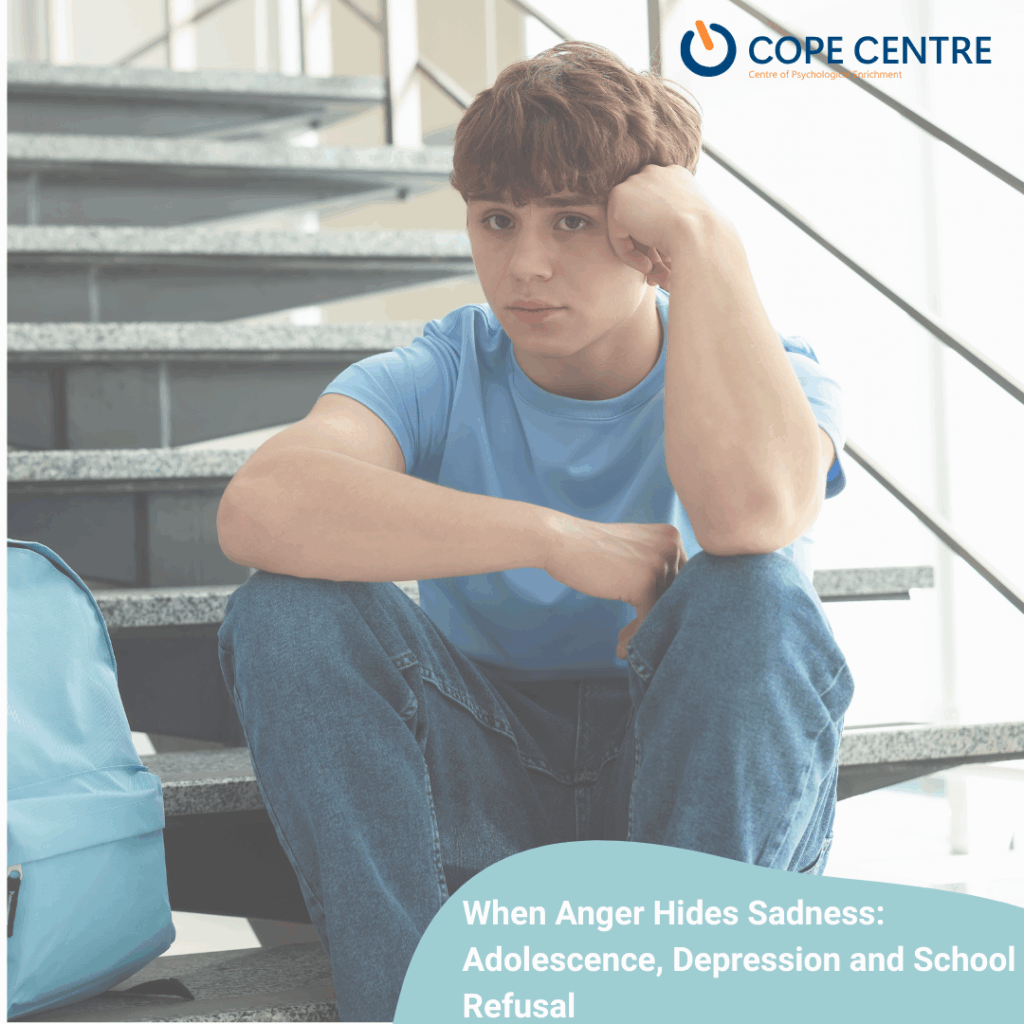
When Anger Hides Sadness: Adolescence, Depression and School Refusal

Depression does not always look like sadness. Adults often imagine depression as visible sadness or tearfulness. In adolescents, it may instead appear as:
• Irritability, anger or frequent conflict
• School refusal or declining attendance
• Withdrawal from family, friends or activities
• Alcohol or other drug use
• Fighting, impulsivity or risk-taking
• Sleep disruption and difficulty getting up
• Falling grades or reduced motivation
• Hopelessness, self-harm or suicidal thinking

When Anger Hides Sadness: Adolescence, Depression and School Refusal Read More »

Personality structure and Crisis: How integration can build a pathway to stability 

Explore personality structure, psychological crisis and integration through Otto Kernberg’s psychodynamic framework, and discover how self-awareness can support greater emotional stability and meaningful change.

Personality structure and Crisis: How integration can build a pathway to stability  Read More »

Walking the Tightrope: Autonomy vs. Enabling in Psychosocial Mental Health Work 

Avoidance can provide short-term relief from anxiety, fear and discomfort, but over time it may reinforce the patterns that keep us feeling stuck. Explore the psychology behind avoidance and approach goals, why avoidance develops, and how taking small, meaningful steps toward discomfort can support confidence, connection, personal growth and lasting change.

Walking the Tightrope: Autonomy vs. Enabling in Psychosocial Mental Health Work  Read More »

Avoidance vs Approach Goals: Why Facing What We Fear Matters

Avoidance can provide short-term relief from anxiety, fear and discomfort, but over time it may reinforce the patterns that keep us feeling stuck. Explore the psychology behind avoidance and approach goals, why avoidance develops, and how taking small, meaningful steps toward discomfort can support confidence, connection, personal growth and lasting change.

Avoidance vs Approach Goals: Why Facing What We Fear Matters Read More »

Building Resilience from the Inside Out: The Case for the CFRP in Australia’s NDIS Psychosocial Support Workforce

Australia’s psychosocial support workforce faces increasing rates of burnout and compassion fatigue. Discover how the evidence-based Compassion Fatigue Resiliency Program (CFRP) can strengthen resilience, improve workforce wellbeing, and support sustainable, high-quality care across the NDIS and broader community mental health sector.

Building Resilience from the Inside Out: The Case for the CFRP in Australia’s NDIS Psychosocial Support Workforce Read More »

The Healing Power of Nature: Supporting Mental Health, Stress Reduction and Mental Clarity

Modern life is often fast-paced, overstimulating, and mentally demanding, leaving many people feeling emotionally depleted and cognitively fatigued. Increasing research suggests that one of the most accessible and effective ways to support mental wellbeing is through reconnection with nature. Time spent in natural environments—or even brief sensory engagement with natural elements—can help reduce stress, restore attention, and support emotional regulation by allowing the nervous system to settle and recover from ongoing demands.

From a psychological perspective, exposure to nature is linked with reduced physiological stress responses and improved cognitive functioning. Theories such as Stress Recovery Theory and Attention Restoration Theory help explain how natural environments promote calmness, reduce mental fatigue, and restore the capacity for focused attention. Even indirect experiences of nature, such as viewing greenery, listening to natural sounds, or engaging with natural imagery, have been shown to provide measurable benefits for mood and stress levels.

For many individuals, nature also offers a grounding and regulating space that can gently support emotional balance, particularly during periods of overwhelm, anxiety, or recovery from stress. Rather than replacing clinical or therapeutic supports, it can act as a meaningful complement—helping to create moments of stillness, clarity, and reconnection in everyday life.

The Healing Power of Nature: Supporting Mental Health, Stress Reduction and Mental Clarity Read More »

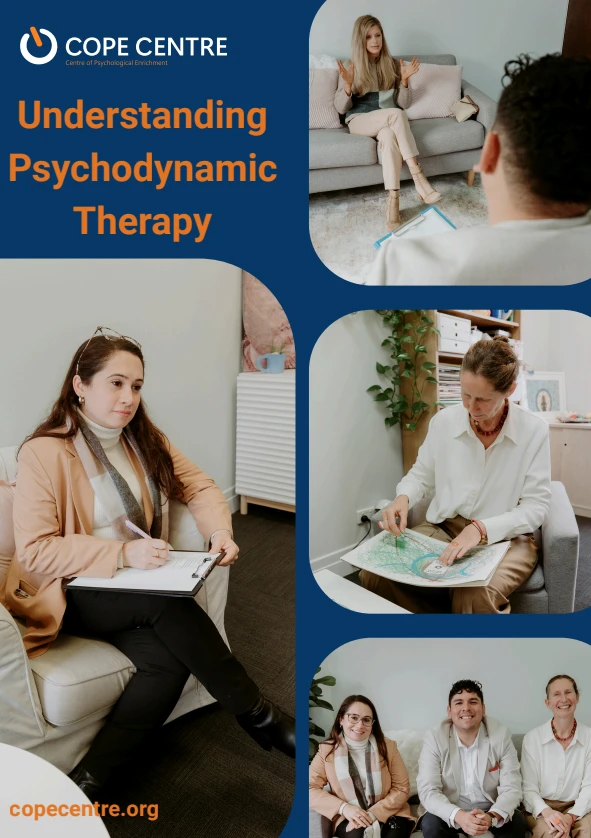
Understand Psychodynamic Therapy
Thinking about therapy but unsure where to start?
Download our free guide explaining:

We never send spam. Unsubscribe anytime.