Couples Counselling
Couples & Relationship Therapy
Relationship counselling offers valuable insights into current challenges, equipping you with the tools and foundation to navigate future obstacles. We also provide individual relationship counselling to help you uncover the underlying causes of conflicts and develop the skills needed for building healthier, more fulfilling relationships. Our commitment is to support individuals in overcoming relationship issues, fostering happier, more satisfying connections, and enhancing their overall quality of life.
Building Understanding, Connection and New Ways of Relating
Our therapists will help you understand feelings and common conflicts, and help couples regain control of their relationships.
Relationships can become difficult when communication breaks down, conflict becomes
repetitive, or partners begin to feel disconnected from one another. Couples counselling
offers a confidential space to explore these difficulties, understand what is happening within the relationship, and discover new ways of relating.
At COPE, we offer individualised couples counselling, drawing primarily on psychodynamic psychotherapy alongside integrative, experiential and action-based therapeutic approaches. Rather than focusing only on the immediate problem, therapy explores the deeper patterns, experiences and relationship dynamics that may be contributing to ongoing difficulties. The aim is to help couples develop greater understanding, improve communication and discover new possibilities for connection.
Moving Beyond Conflict and Disconnection
Many couples find themselves having the same arguments repeatedly, even when both partners genuinely want things to change. One partner may pursue conversation and reassurance while the other withdraws or becomes defensive. Over time, these familiar responses can leave both people feeling unheard, frustrated or alone. Therapy helps couples recognise these patterns and explore what may be happening beneath the surface. Rather than deciding who is right or wrong, couples counselling looks at the dynamics between partners and the experiences that may be shaping their responses. This can include attachment patterns, family history, unmet needs, cultural influences and wider family or systemic circumstances. Understanding these dynamics can create opportunities to move beyond repetitive cycles of conflict towards greater awareness, flexibility and choice.
What to Expect
In sessions, our therapists work collaboratively with each couple to understand their relationship dynamics and the individual experiences that influence how they relate to one another. A psychodynamic approach explores how past experiences, unconscious feelings and
established relational patterns can shape present-day interactions. Integrative and experiential methods offer additional ways of exploring what happens between partners, particularly when experiences are difficult to express through words alone.
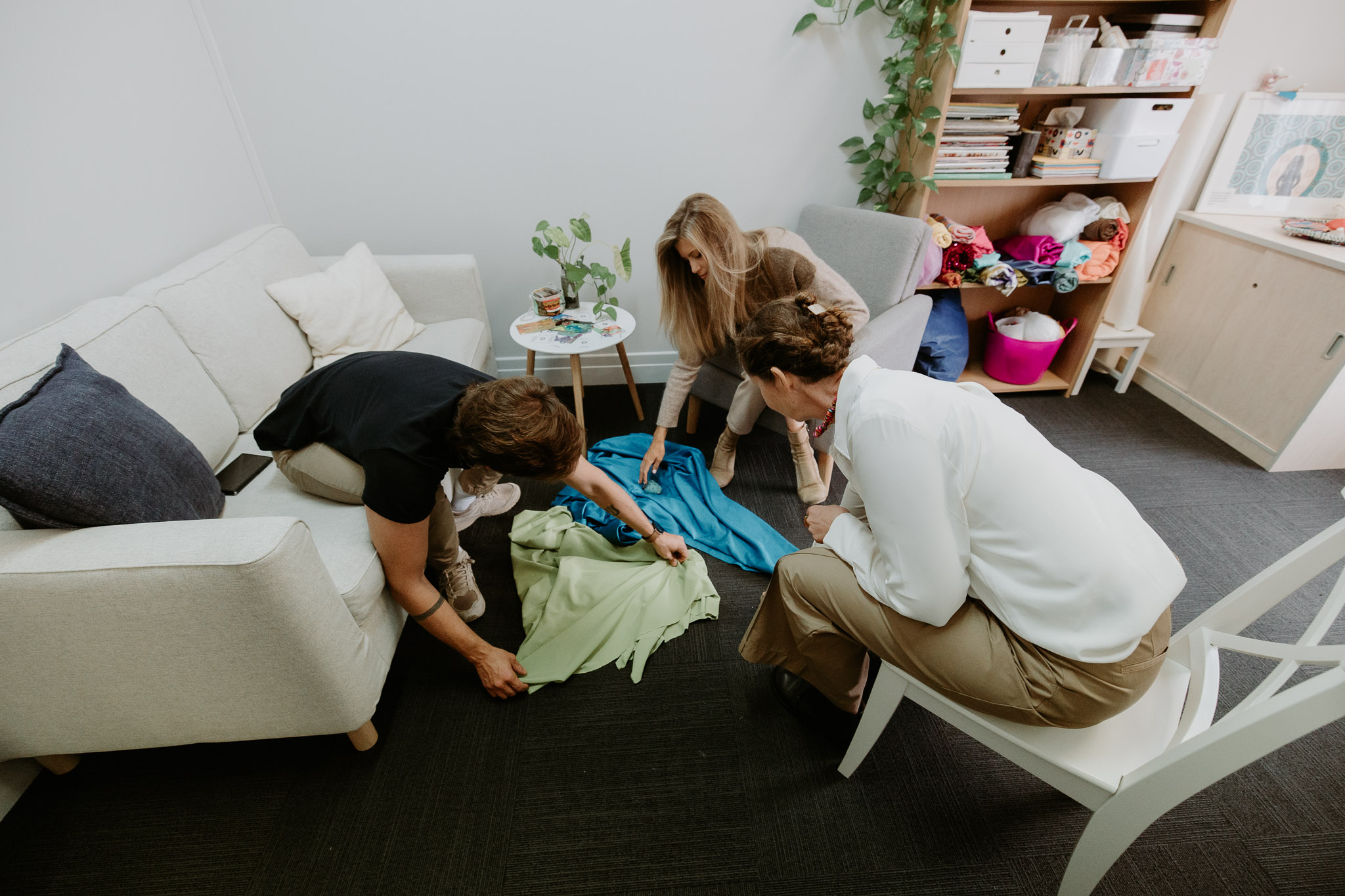
Depending on the needs of the couple, sessions may incorporate positioning, movement, chairs or objects to explore experiences of closeness, distance, connection, separation and power. These approaches can make relationship dynamics more tangible and help couples see familiar patterns from a different perspective.
Attention is given not only to what partners say, but also to tone, behaviour, movement and bodily responses. Becoming more aware of these responses can help couples recognise reactions that may otherwise remain outside conscious awareness. The process is individualised, allowing space for each couple’s unique history, concerns and
ways of relating.
At COPE CENTRE, we create
A neutral, safe space for the couple to discuss their concerns openly and respectfully
A space where both partners can be heard openly and respectfully. Couples counselling provides an opportunity for both people to explore their experiences without reducing the relationship’s difficulties to one person’s fault or responsibility. Our therapists pay close attention to how each partner participates in sessions and to the dynamics that develop between them. The intention is to support a balanced exploration of both perspectives while remaining attentive to the relationship as a whole. Where appropriate, individual sessions may also provide additional space to explore particular experiences or concerns. Couples counselling is not about determining who is right or wrong. It is about understanding the individuals within the relationship, recognising the patterns that have developed between them, and exploring where new possibilities for relating may exist.
Couples & Relationship Counselling
What Can Couples Counselling Help With?
Couples seek counselling for many different reasons. Sometimes there is a specific issue they want to address; at other times, they may simply know that something in their relationship no longer feels right.
Counselling can help couples explore concerns such as:
- Recurring arguments and ongoing conflict
- Communication difficulties and feeling misunderstood
- Emotional disconnection and loneliness within the relationship
- Difficulties with intimacy, closeness and trust
- Relationship ruptures and the impact of past experiences or trauma
- Different needs, expectations or values
- Family and parenting pressures
- Cultural and family differences
- Major life transitions and changing relationship roles
- Complex family dynamics and blended family challenges
- Neurodiversity and differences in communication or relating
- Uncertainty about the future of the relationship
Understanding what lies beneath
Sometimes, the concern that brings a couple to counselling is only part of a larger picture. What initially appears to be a communication problem may be connected to longstanding relational patterns, family experiences, unmet needs or difficulties with trust.
Therapy provides an opportunity to explore these underlying concerns and consider what might be possible for the relationship moving forward.
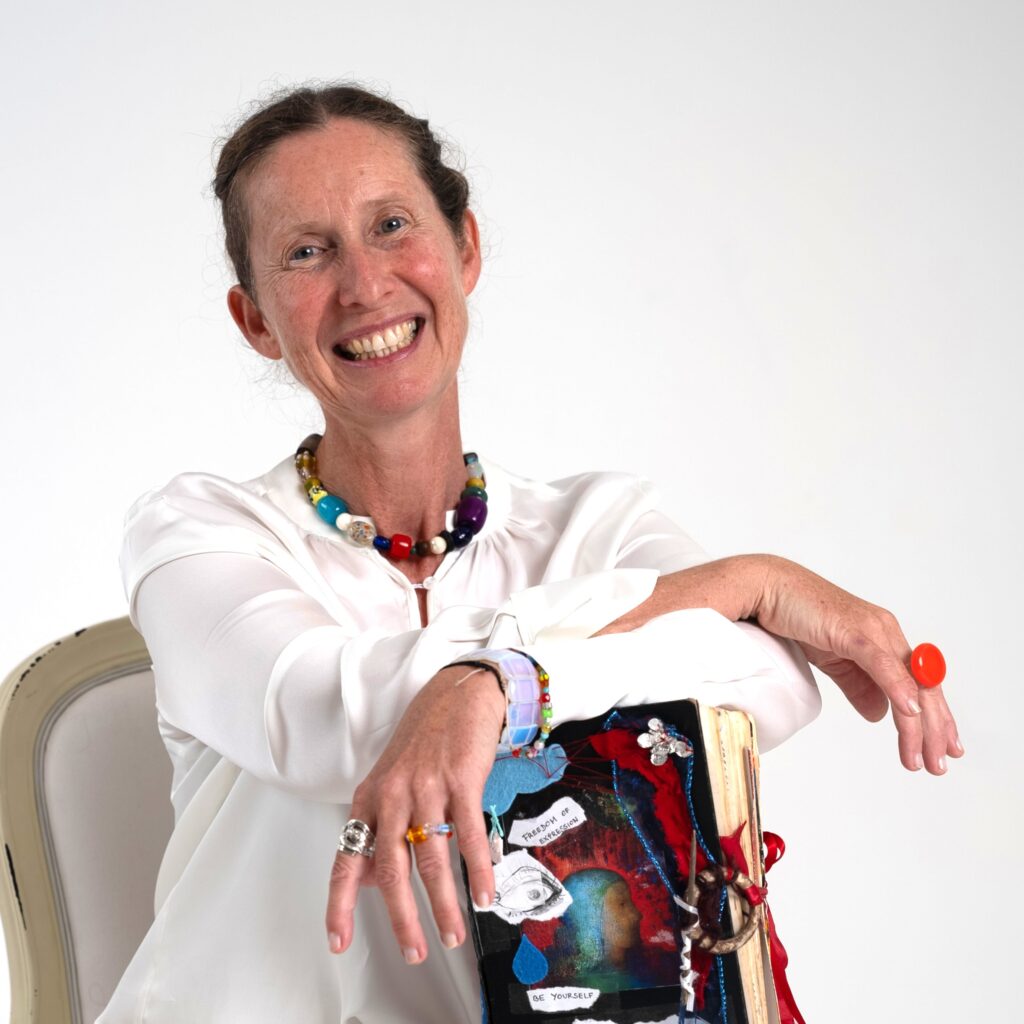
Psychodynamic Psychotherapist | Couples Counsellor
Elisabeth offers a warm, thoughtful approach to couples counselling, combining psychodynamic psychotherapy with creative and experiential methods. She helps partners explore recurring conflict, emotional disconnection and the experiences that shape how they relate to one another.
Drawing on her background as an interdisciplinary artist, Elisabeth incorporates creative expression, movement and bodily awareness where helpful, offering ways to explore feelings that can be difficult to express in words. Her work supports greater self-awareness, mutual understanding and new possibilities for connection.
Originally from Austria, Elisabeth brings sensitivity to cultural identity, belonging and difference. She offers therapy in English and German.
Prices: Face to face consult $230
Why Couples Sometimes Need More Than Communication Skills
Are You Still Talking, But No Longer Connecting?
You love each other. Yet somehow, you keep having the same argument. One of you keeps trying. The other withdraws. Messages are misunderstood, resentments build and intimacy begins to fade. Conversations become increasingly practical — work, children, finances and responsibilities — while the deeper connection between you becomes harder to find. And somewhere beneath it all may be a painful question: How did we become strangers to each other? Many couples come to counselling hoping to communicate better. Yet even when they understand what needs to change, familiar patterns can be difficult to break. What if the problem is not simply how couples communicate, but what happens emotionally between them when they try to connect? At COPE Centre Perth, Elisabeth Eitelberger works with couples to explore the relational patterns, emotional experiences and expectations that shape their relationships. Drawing primarily on psychodynamic psychotherapy and integrating arts-based, experiential and other approaches, Elisabeth offers a way of working that moves beyond conversation alone. We spoke with her about emotional disconnection, creative approaches to couples counselling and how partners can rediscover curiosity, flexibility and the capacity to play together.
Often in relationships, there is a feeling of not being heard or validated, due to differing opinions /values. Conflict usually occurs due to unresolved issues and/or an inability to get past a negative cycle that becomes ingrained over time. Being able to listen, validate, and communicate effectively is important for emotional safety. Recognising patterns of behaviour and intergenerational influences that we carry within, and physiological responses also play a key role in our behaviours and reactions within relationships. When conflict occurs, it can be used as a time for learning and growth within the relationship.
Elisabeth: Understanding a pattern intellectually is not necessarily the same as being able to change it. One partner may feel unheard and push harder to be understood. The other feels criticised or overwhelmed and withdraws. The withdrawal intensifies the first partner's distress, and the cycle continues. Both may be trying to protect themselves, yet their responses unintentionally create more distance. My approach is primarily psychodynamic, which means I am interested in the relational dynamics beneath the presenting problem. How do our past experiences influence the way we respond to our partner? What expectations do we bring into the relationship? What happens within us when we feel rejected, criticised or vulnerable? The aim is not to find someone to blame. It is to help couples recognise the patterns they are caught in and discover different ways of relating.
Elisabeth: Communication skills can be very helpful, but sometimes couples already know what they are supposed to do. They know they should listen, avoid blaming and express their needs clearly, yet struggle to do so when emotions run high. Psychodynamic work invites us to explore what lies beneath these difficulties. For example, "You never listen to me" might express frustration, but it may also carry feelings of loneliness or a fear of not mattering. The partner hearing it may experience criticism and respond defensively. Both people can become so focused on protecting themselves that the need for connection gets lost. By slowing down these interactions, we can begin to understand each person's experience and how their responses affect one another. This creates opportunities for greater awareness, flexibility and change.
Elisabeth: Couple therapy can reach an impasse quite quickly. Partners may become so caught up in explaining their positions that they lose sight of what is happening between them. My background in arts practice, performative methods and group dynamics has influenced how I work. I am interested in how people communicate through more than words — through movement, physical distance, silence and the way they place themselves in relation to others. I introduce positioning techniques early in the therapeutic process because they can offer another way to explore a relationship. For example, we might use chairs or objects to make closeness and distance more tangible. We can explore what happens when someone moves closer, steps away or changes their position. The purpose is not to create an artwork or arrive at a predetermined result. It is to help couples experience their relationship from a different perspective. Sometimes, doing something differently can reveal what has been difficult to express verbally.
Elisabeth: Not at all. You do not need artistic skills or previous experience with creative work.
Arts psychotherapy is not about producing something beautiful. It is about exploring experiences in
ways that may extend beyond conversation.
Depending on the couple's needs, this might involve movement, positioning, objects or simply noticing
how a particular interaction feels.
We then reflect on what emerged. What did each person notice? Was something unexpected? Did a
different perspective change how they understood the situation?
These methods complement therapeutic conversation. Their purpose is to support exploration and
understanding, rather than to replace talking altogether.
Elisabeth: When I talk about play, I am not necessarily talking about games or trying to make light of
difficult problems.
I see play as the capacity to be curious, flexible and open to possibilities.
When couples become stuck in familiar patterns, they often begin to anticipate one another's
responses. They may feel that they already know what their partner thinks or what will happen next.
There is little room for surprise.
Play invites us to experiment and discover that we do not always have to respond in the same way.
It can help couples move beyond familiar roles — the one who pursues, the one who withdraws, the
one who criticises or the one who tries to keep everything together.
Sometimes this creates room for humour, tenderness, affection and shared enjoyment to re-emerge.
Of course, playfulness cannot be forced, and it does not replace the need to address painful
experiences. Sometimes we first need to understand what has made it difficult for a couple to feel
safe or spontaneous with each other.
Learning to play again is about rediscovering the possibility of relating differently
Elisabeth: We all bring histories into our intimate relationships. Family experiences, previous relationships, attachment experiences and difficult life events can influence what we expect from others and how we respond when we feel vulnerable. For one person, emotional distance may feel like rejection. For another, a request for closeness may feel like pressure. These are not fixed explanations, and our past does not determine our future. However, exploring how earlier experiences may influence present reactions can help us understand why certain situations feel particularly difficult. The aim is not to blame childhood or spend every session looking backwards. It is to develop a greater understanding of ourselves and our partner, so we can respond to the present with more awareness and choice.
Elisabeth: I believe change becomes possible when both partners are willing to focus on their own growth, rather than concentrating exclusively on what they feel is missing in the other person. It is understandable to want a partner to change. However, when we focus entirely on what the other person should do differently, we can lose sight of our own responses and the choices available to us. I encourage couples to become curious about what happens within themselves when they feel disappointed, rejected or misunderstood. What am I expecting? What am I afraid might happen? How do I protect myself when I feel hurt? What effect might my response have on my partner? This does not mean accepting responsibility for everything or excusing harmful behaviour. It means developing awareness of the relationship patterns we participate in and recognising where different responses may be possible.
Elisabeth: I pay attention to how each person participates in the sessions. Sometimes one partner is more confident in expressing themselves, while the other needs more time or a different way of communicating. I try to create opportunities for both partners to participate and explore their experiences. I also pay attention to boundaries, authenticity and power dynamics. If something important emerges in the therapeutic relationship itself, we may need to acknowledge it and explore what it means. Safety is essential, particularly when working with difficult emotions. Where there are concerns about coercion, abuse or intimidation, the approach must prioritise safety rather than simply encouraging greater openness between partners. Each couple needs an approach that responds to their circumstances, rather than a fixed formula.
Elisabeth: Couples come to therapy with many different concerns, including recurring conflict, communication difficulties, emotional disconnection, intimacy concerns and major life transitions. However, couples often arrive with one presenting problem and discover that other issues are also important. These may involve family dynamics, cultural expectations, financial pressures, past experiences or differing ideas about relationships. I work with neurodiverse couples, LGBTQIA+ couples, blended families and culturally diverse relationships. Every couple brings their own experiences and ways of relating, and I aim to remain curious rather than make assumptions. My approach is individualised and flexible. I draw on psychodynamic psychotherapy, arts psychotherapy and integrative methods according to the needs of the people I am working with.
Elisabeth: Sometimes couples begin to see one another differently. They may recognise that their partner's responses have meanings they had not previously understood. They may become more aware of their own patterns and find new ways to express their needs. They may also rediscover playfulness — a sense of humour, affection, shared enjoyment or simply the ability to be together without every interaction becoming another problem to solve. This does not mean that every difficulty disappears. It means there may be more room for curiosity, flexibility and connection. The goal is not to create a perfect relationship without conflict. It is to develop greater awareness of what happens between you and more freedom in how you respond.
Take the next step together
You don’t have to wait until
the hurt becomes harder to carry.
When conflict repeats or distance grows, reaching out can create space for something different. Couples counselling offers an opportunity to understand what lies beneath the hurt, communicate your needs and explore new ways of relating.
Begin the conversation with COPE.
BOOK NOW →