Rooted in Nature: Why the Wild World Is Essential to Human Healing
Edited by Avisha Chhania
Exploring the science, theory, and practice of nature-based healing, and why the natural world may be one of our most powerful therapeutic partners

There is something quietly transformative about sitting beside a river, watching a bird of prey circle overhead or feeling the soft give of forest soil underfoot. These experiences are not merely pleasant, they are, according to a rapidly expanding body of research, genuinely therapeutic. The intersection of psychology and the natural world has given rise to an entire field of study and practice: ecopsychology and its therapeutic expression, ecotherapy. What this field tells us is both scientifically grounded and, in some respects, ancient knowledge renewed, that human beings are not separate from the natural world and that our psychological wellbeing is deeply entangled with it.
What Is Ecopsychology?
Ecopsychology is a synthesis of ecology and psychology that emerged in response to the growing recognition that traditional mental health frameworks were failing to account for one of the most fundamental dimensions of human experience: our relationship with the living world (Lenehan & Watson, 2022). More than simply applying psychological strategies to environmental problems, ecopsychology represents a transformation of psychology itself, one that re-values the physical, emotional and spiritual bonds humans share with the natural world, bonds that are marginalised within a predominantly mechanistic, urban and technology-driven worldview (Lenehan & Watson, 2022).
The field recognises not a subject-object relationship between people and their environment, but rather what researchers describe as “intra-action", a mutually constitutive relationship in which human beings and the rest of nature are always already shaping one another (Lenehan & Watson, 2022). As one ecotherapy practitioner put it: "Everything is interconnected. Everything is relationship. We're not separate from the natural world."
The applied or therapeutic expression of ecopsychology has been labelled ecotherapy, defined as an umbrella term for nature-based methods of physical and psychological healing that address the fundamental fact that people are intimately connected with, embedded in, and inseparable from the rest of nature (Buzzell & Chalquist, 2009, as cited in Lenehan & Watson, 2022).
The Evidence: What Research Tells Us
The evidence base supporting the mental health benefits of nature contact has grown from a handful of studies to approaching and surpassing one thousand, all pointing in the same direction: nature is not only nice to have, but is a "have-to-have" for physical health and cognitive functioning (Louv, as cited in Robbins, 2020).
The Two-Hour Dose
One of the most important findings in this field concerns the minimum effective dose of nature. A landmark study of nearly 20,000 participants in England, led by Mathew White of the European Centre for Environment and Human Health at the University of Exeter, found a clear dose-response relationship between time spent in nature per week and reported health and wellbeing. People who spent at least two hours per week in green spaces, parks or other natural environments, either all at once or spread over several visits, were substantially more likely to report good health and psychological wellbeing than those who spent none (White et al., 2019, as cited in Robbins, 2020; Simply Psychology, 2026). This effect was consistent across age, income, ethnic group and pre-existing health conditions (Robbins, 2020).
Two hours was identified as a hard boundary: below this threshold, benefits were minimal (Simply Psychology, 2026).
Stress, Anxiety, and Depression
Time in nature, provided people feel safe, functions as a genuine antidote to stress. Research has consistently demonstrated that nature exposure lowers blood pressure and stress hormone levels, reduces nervous system arousal, shifts the autonomic nervous system toward parasympathetic dominance, enhances immune system function, increases self-esteem, reduces anxiety and improves mood (Robbins, 2020). A 2019 meta-analysis examining 143 studies found that nature contact produced significant reductions in depression, anxiety and cortisol alongside improvements in positive affect (Simply Psychology, 2026).
Psychiatric unit researchers have found that being in nature reduced feelings of isolation, promoted calm and lifted mood among patients (Robbins, 2020). Studies of forest therapy for depression and anxiety have shown significant symptom improvements and horticultural therapy has demonstrated effects across populations including those with schizophrenia (Lenehan & Watson, 2022).
Immune Effects and Forest Bathing
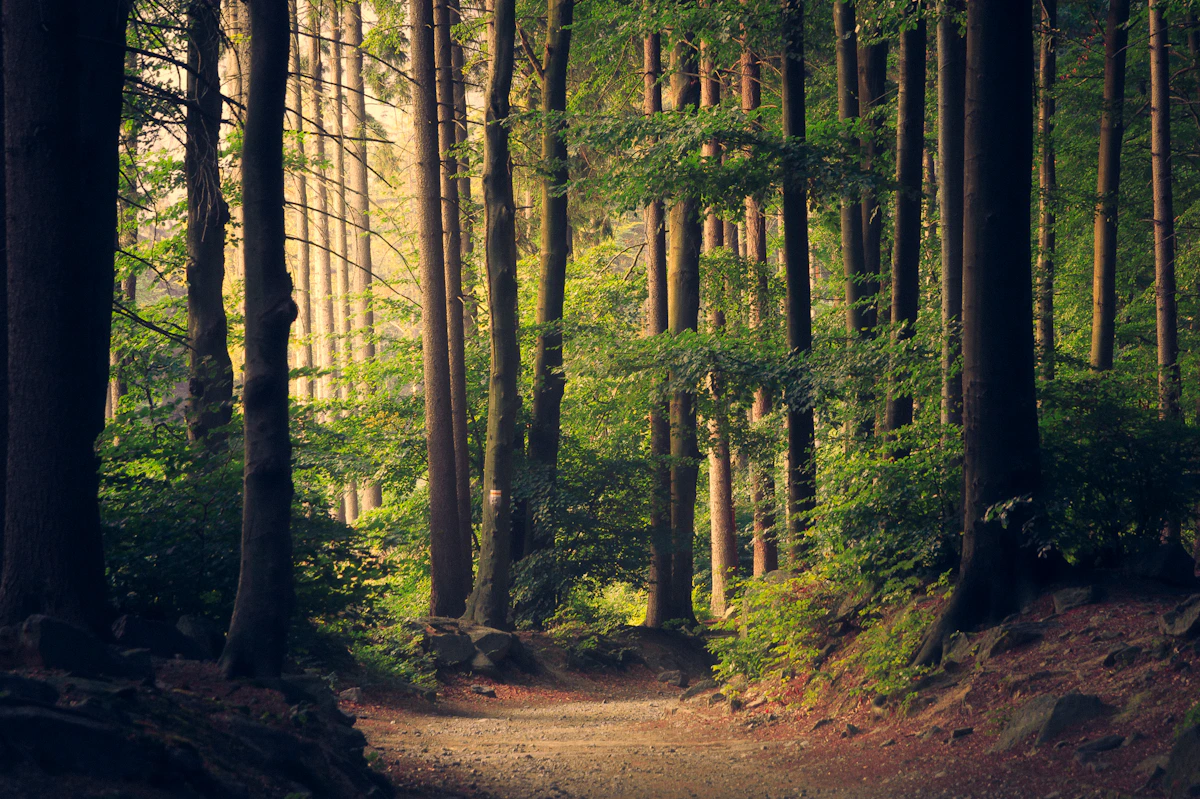
Japanese researchers have studied what they call Shinrin-yoku, or forest bathing, the practice of slow, immersive walking in forest environments. Trees and plants emit organic compounds called phytoncides that have measurable immune effects, including elevated levels of Natural Killer (NK) cells, which fight tumours and infections (Robbins, 2020). In healthy forests, trees also filter dust and toxic chemicals while increasing oxygen levels, and time walking through forest environments has been associated with lowered blood pressure, improved lung capacity and arterial elasticity, and increased relaxation (Puk, as cited in the European Journal of Ecopsychology).
Why Nature Heals: The Theoretical Frameworks
Several theoretical frameworks help explain the pathways through which nature produces its healing effects.
Attention Restoration Theory (ART)
Attention Restoration Theory (ART), developed by Rachel and Stephen Kaplan, holds that natural environments restore depleted directed attention through involuntary, effortless engagement with natural stimuli, allowing the mind to rest and recover from the fatigue of urban and occupational demands (Simply Psychology, 2026; Robbins, 2020).
Stress Recovery Theory (SRT)
Stress Recovery Theory (SRT), developed by Roger Ulrich, proposes that natural environments produce rapid, automatic stress recovery through evolved associations between natural settings and safety. Urban environments, by contrast, maintain a low-level state of vigilance and arousal (Simply Psychology, 2026).
The Biophilia Hypothesis
The Biophilia Hypothesis, proposed by Edward O. Wilson, suggests that humans have an innate need for connection with living systems. Disconnection from nature produces a form of psychological impoverishment analogous to social isolation (Simply Psychology, 2026).
Eco-psychological and Transpersonal Theory
Eco-psychological and Transpersonal Theory, going beyond the above frameworks, ecopsychologists argue that the healing power of nature reflects something deeper: our fundamental ecological interdependence and transpersonal identity with the living world. As Roszak (1992) put it, "The needs of nature are the needs of people." In this view, reconnecting with nature is not merely therapeutic in the conventional sense, it is a return to self (Lenehan & Watson, 2022).
The Forms of Nature-Based Healing
Ecotherapy encompasses a diverse range of approaches, each with its own evidence base and application:
Wilderness Therapy
Wilderness Therapy: An intensive nature-based programs combining outdoor challenge with therapeutic process, typically for adolescents and young people, offering experiences of mastery, self-efficacy and relational depth in natural contexts.
Horticultural and Garden Therapy
Horticultural and Garden Therapy: Using plant cultivation and gardening as a therapeutic medium, with documented benefits across populations including those living with depression, dementia and rehabilitation needs. Horticultural therapy is notable for explicitly including care for nature, not merely use of it, as a central element of the work (Lenehan & Watson, 2022).
Forest Bathing (Shinrin-yoku)
Forest Bathing (Shinrin-yoku): The Japanese practice of slow, immersive time in forest environments, now supported by an extensive evidence base for stress reduction, immune enhancement and improvements in mood and sleep.
Animal-Assisted Therapy
Animal-Assisted Therapy: Engaging with animals in therapeutic contexts, which has shown benefits for PTSD, anxiety and relational difficulties. Crucially, the Masterson-influenced literature and Eco-psychological research both highlight the importance of ethical, reciprocal engagement with animals rather than their instrumental use as therapeutic tools (Lenehan & Watson, 2022).
Walk-and-Talk Therapy
Walk-and-Talk Therapy: Conducting psychotherapy sessions while walking in natural or semi-natural environments, integrating movement, embodiment and nature contact into the therapeutic process.
Nature-Based Mindfulness
Nature-Based Mindfulness: Bringing mindful, sensory attention to natural environments, activating what some Indigenous practitioners describe as "deep listening, “dadirri” in the Australian Aboriginal tradition, a way of being present that creates space for relationships built on trust, respect and reciprocity (Lenehan & Watson, 2022).
Conservation and Land Management as Healing
Conservation and Land Management as Healing: Particularly prominent in First Nations frameworks, active caring for country has been associated with improvements in self-esteem, identity, cultural connection and measurable health outcomes including reduced cardiovascular risk and psychological distress (Burgess et al., 2009, as cited in Lenehan & Watson, 2022).
Indigenous Knowledge and Country as Healer
No discussion of the intersection of psychology and the natural world is complete without acknowledging the wisdom traditions of First Nations peoples, for whom the therapeutic relationship with country has never been a new discovery but a foundational and enduring reality.
Aboriginal and Torres Strait Islander wellness models have long recognised connection to country and caring for country as central dimensions of identity, healing and wellbeing (Gee et al., 2014, as cited in Lenehan & Watson, 2022). Research has found that Indigenous land management programs produce broad positive wellbeing outcomes for people, communities and country, building self-esteem, fostering self-identity, maintaining cultural connection and enabling relaxation through contact with the natural environment (Kingsley et al., 2009, as cited in Lenehan & Watson, 2022).
A cross-sectional study of 298 Indigenous residents of an Arnhem Land community found significant relationships between caring for country and measurable health outcomes including reduced psychological distress and cardiovascular disease risk (Burgess et al., 2009, as cited in Lenehan & Watson, 2022). Aboriginal elders insist that reconnecting people with land is a preferred mode of healing (Gooda & Dudgeon, 2018, as cited in Lenehan & Watson, 2022).
The practice of “dadirri”, deep listening as both a methodological and therapeutic practice, offers a model for the kind of receptive, embodied and relational engagement with nature that ecotherapy practitioners increasingly recognise as foundational (Ungunmerr-Baumann et al., 2022, as cited in Lenehan & Watson, 2022).
Reciprocity: Nature Heals When We Care for It
One of the most important emerging insights in this field is the concept of human-nature wellbeing reciprocity, the understanding that the healing relationship with nature is not one-directional. Wellbeing flows not only from nature to humans, but from humans to nature when the relationship is approached with care, respect and ethical intention (Lenehan & Watson, 2022).
This understanding challenges the instrumental logic that has often dominated both healthcare and conservation, the idea that nature is a resource to be used for human ends. Ecotherapy practitioners argue that approaches grounded purely in what nature can do for people, without attention to what people can do for, and with, nature, inadvertently reproduce the very alienation that underlies the Eco-psychological crisis (Lenehan & Watson, 2022).
Caring for nature through conservation, gardening, land stewardship and animal care, produces human wellbeing benefits precisely because it reconnects people to a sense of meaning, relationship and ecological belonging that modern life has tended to erode. The wellbeing that flows from caring for a garden, restoring a degraded habitat or building a relationship with a horse is not incidental to the act of caring, it is its expression.
"When we create a garden, a sensory garden, space for nature to thrive, we're giving to nature, we're rejuvenating nature, but we're receiving too."
— Ecotherapy practitioner, cited in Lenehan & Watson (2022)
Conclusion: Coming Back to Where We Belong
The intersection of psychology and wildlife is not a niche speciality or an alternative adjunct to real mental health care. It is, increasingly, a central part of what serious mental health support looks like in the 21st century. The evidence is robust, the theoretical frameworks are sound and the clinical applications are growing in sophistication and reach.
What this field ultimately invites is a shift not only in how we treat psychological distress, but in how we understand ourselves. If, as ecopsychology proposes, human beings are not separate from but continuous with the living world, if, as one practitioner put it, "We are nature", then healing cannot be fully accomplished in isolation from the web of life of which we are a part.
The path back to wellbeing may, quite literally, run through the forest!
References
Burgess, C., Johnston, F., Berry, H., McDonnell, J., Yibarbuk, D., Gunabarra, C., Mileran, A., & Bailie, R. (2009). Healthy country, healthy people: The relationship between Indigenous health status and 'caring for country'. Medical Journal of Australia, 190(10), 567-573. DOI
Buzzell, L., & Chalquist, C. (2009). Ecotherapy: Healing with nature in mind. Sierra Club Books.
Gee, G., Dudgeon, P., Schultz, C., Hart, A., & Kelly, K. (2014). Aboriginal and Torres Strait Islander social and emotional wellbeing. In P. Dudgeon, H. Milroy, & R. Walker (Eds.), Working together: Aboriginal and Torres Strait Islander mental health and wellbeing principles and practice (2nd ed.). Commonwealth of Australia.
Gooda, M., & Dudgeon, P. (2018). The Elders' report into preventing Indigenous self-harm & youth suicid. People, Culture, Environment.
Kingsley, J., Townsend, M., Phillips, R., & Aldous, D. (2009). "If the land is healthy, it makes the people healthy": The relationship between caring for country and health for the Yorta Yorta Nation, Boonwurrung and Bangerang Tribes. Health & Place, 15, 291-299. DOI
Lenehan, M., & Watson, L. (2022). Reciprocal ecotherapy: A qualitative exploration of ecocentric perspectives and mutualistic wellbeing in the ecotherapies. The Australian Community Psychologist, 33(1), 86-106. Read publication
Puk, T. (2021). Nature-based regenerative healing: A case-study of interpersonal ecotherapy. European Journal of Ecopsychology, 7, 19-40. Read publication
Puk, T. (2023). Nature and neurons [Article]. European Journal of Ecopsychology, 9. Read publication
Robbins, J. (2020, January 9). Ecopsychology: How immersion in nature benefits your health. Yale Environment 360. Read article
Roszak, T. (1992). The voice of the earth. Simon & Schuster.
Simply Psychology Editorial. (2026, March 23). Nature and mental health: The science behind why the outdoors heals. Simply Psychology. Read article
Ungunmerr-Baumann, M., Groom, R., Schuberg, E., Atkinson, J., Atkinson, C., Wallace, R., & Morris, G. (2022). Dadirri: An Indigenous place-based research methodology. AlterNative, 18(1), 94-103. DOI
White, M. P., Alcock, I., Grellier, J., Wheeler, B. W., Hartig, T., Warber, S. L., Bone, A., Depledge, M. H., & Fleming, L. E. (2019). Spending at least 120 minutes a week in nature is associated with good health and wellbeing. Scientific Reports, 9, Article 7730. DOI
Additional image resource: Japan Rail Club — The Art of Shinrin-yoku