When we think about mental health in adulthood, we often focus on current stressors — work pressure, relationship difficulties, financial worries, loss, or trauma. But many of the patterns that shape how we cope with these challenges began much earlier in life.
Attachment theory, developed by John Bowlby, helps us understand how our earliest relationships influence the way we connect, regulate emotions, and experience ourselves in the world. In simple terms, the way we were cared for as children can shape how we relate to others — and to ourselves — as adults.
For those of us working in psychosocial support, this perspective can be incredibly grounding. It reminds us that behaviours are rarely random. They are often adaptations — creative survival strategies that once made sense.
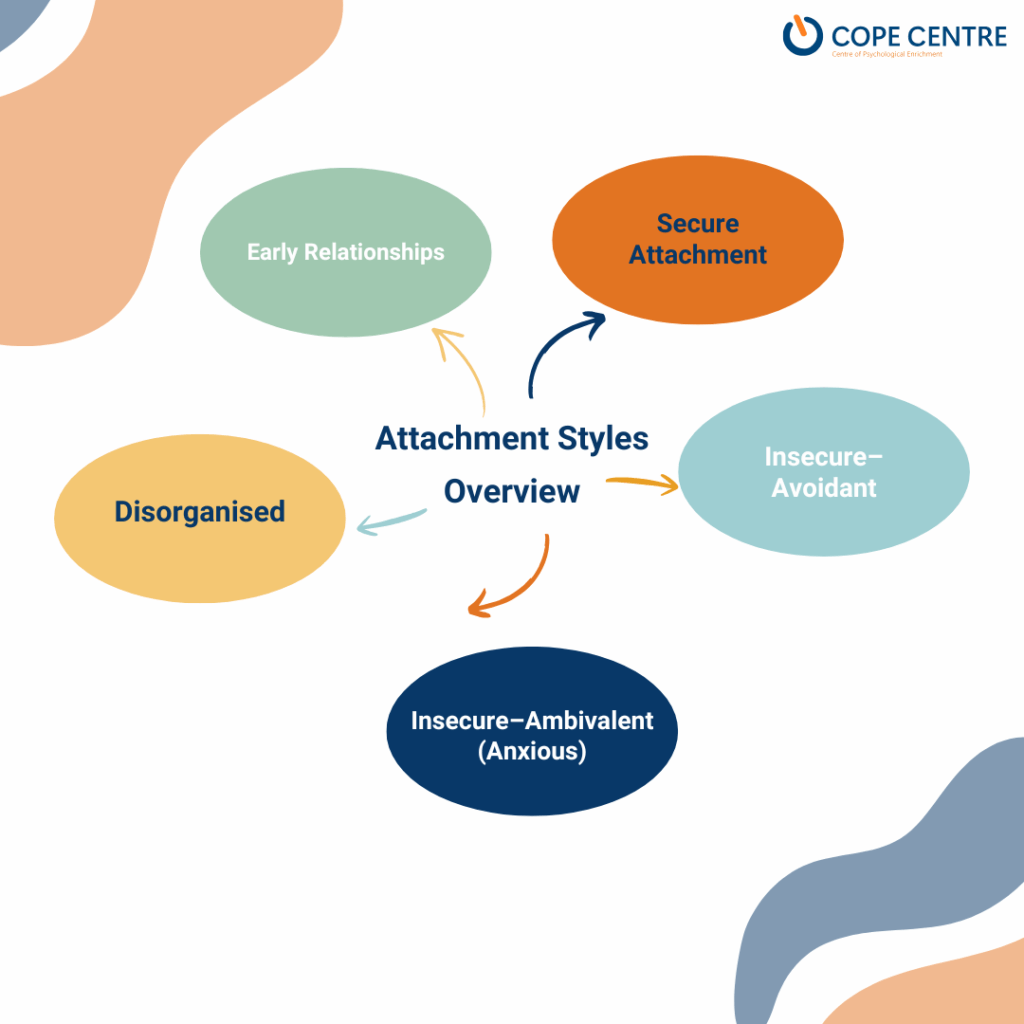
A Quick Overview of Attachment Styles
Attachment styles develop in response to the quality and consistency of early caregiving. They are not labels or life sentences, but patterns — ways of protecting ourselves and managing closeness.
1. Secure Attachment
When caregivers are emotionally available, responsive, and consistent, children tend to develop a secure attachment style. They learn:
“I am worthy of care.”
“Others can be trusted.”
As adults, securely attached individuals generally find it easier to form stable relationships, regulate emotions, and seek support when needed. They can tolerate closeness without feeling overwhelmed and manage distance without panicking.
Secure attachment doesn’t mean perfect mental health — but it often provides a strong foundation for resilience.


2. Insecure–Avoidant Attachment
When caregiving is emotionally distant, dismissive, or rejecting, children may learn to suppress their need for comfort. Instead of expressing distress, they cope by shutting down.
At a deeper level, the internal message can become:
“My needs don’t matter.”
“Depending on others is unsafe.”
In adulthood, this may show up as:
Difficulty with intimacy
Emotional detachment
Discomfort with vulnerability
A strong sense of self-reliance that hides unmet needs
Research has linked dismissing or avoidant attachment patterns with higher rates of conduct issues, substance misuse, and certain personality traits such as narcissistic or antisocial features (Bender et al., 2001). Again, this is not destiny — but it highlights how early relational strategies can evolve into later mental health challenges.
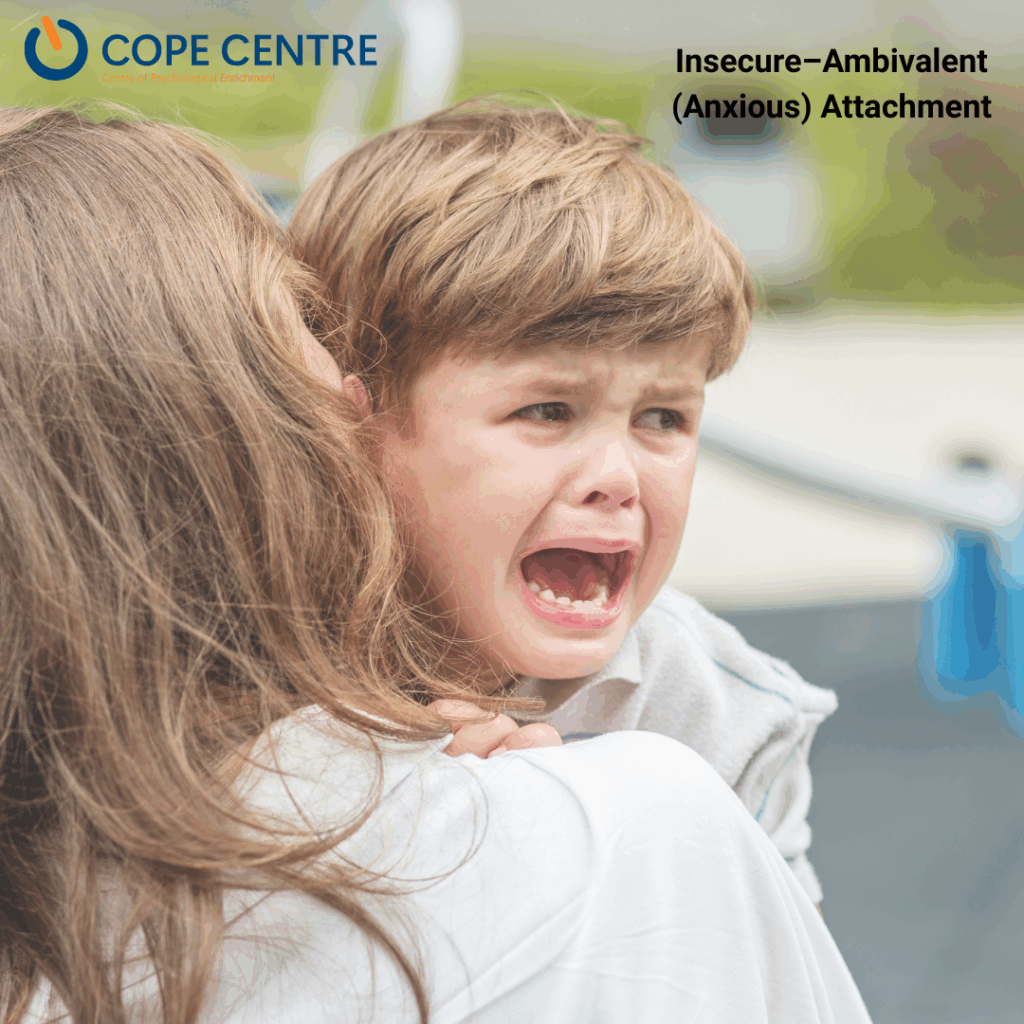
3. Insecure–Ambivalent (Anxious) Attachment
When caregiving is inconsistent — sometimes nurturing, sometimes unavailable — children may become hyper-focused on maintaining closeness. They cannot predict when comfort will come, so they amplify their signals.
The internal narrative may become:
“I am not quite lovable.”
“I have to work hard to keep people close.”
In adulthood, this can look like:
Fear of abandonment
Intense emotional reactions
Difficulty tolerating uncertainty
A push-pull dynamic in relationships
Studies have associated preoccupied attachment with affective disorders such as anxiety and depression, and with personality characteristics such as borderline or histrionic traits (Bender et al., 2001). These patterns are often rooted in a deep longing for stability and reassurance.
4. Disorganized Attachment
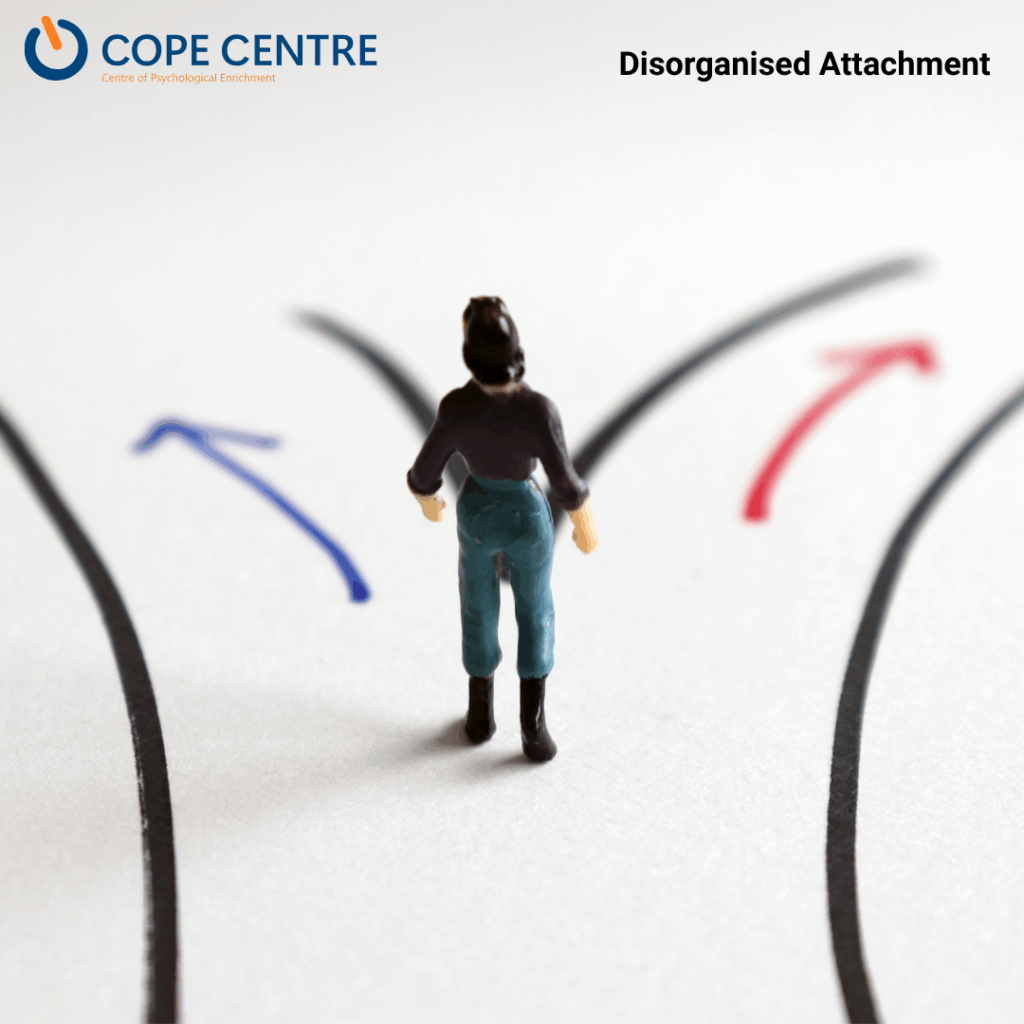
Disorganized attachment is often linked to frightening, neglectful, or chaotic caregiving. In these situations, the caregiver may be both the source of fear and the only available source of comfort.
This creates a painful dilemma for the child: the person who should provide safety also feels unsafe.
Research by Alexander (2021) suggests that disorganized attachment is a primary antecedent of dissociation. When a child cannot reconcile conflicting experiences — “This person hurts me” and “This person protects me” — the mind may fragment as a way to cope. These dissociative patterns can persist into adulthood if left unaddressed.
Adults with disorganized attachment may experience:
Difficulties with emotional regulation
Intense and unstable relationships
Dissociation
Confusion about self-identity
Again, these are not character flaws — they are adaptations to overwhelming relational experiences.
Attachment and Mental Health: Patterns, Not Predictions
It’s important to pause here.
Attachment theory does not say that someone is permanently damaged because of their childhood. It does not reduce a person to a category.
What it does offer is context.
Attachment styles influence:
How we regulate emotions
How we respond to stress
How we seek (or avoid) support
How safe we feel in close relationships
When early caregiving lacked safety or consistency, the nervous system learned to adapt. Those adaptations may later contribute to anxiety, depression, personality difficulties, substance misuse, or dissociation — but they began as protective strategies.
Understanding this shifts our lens from judgment to curiosity.
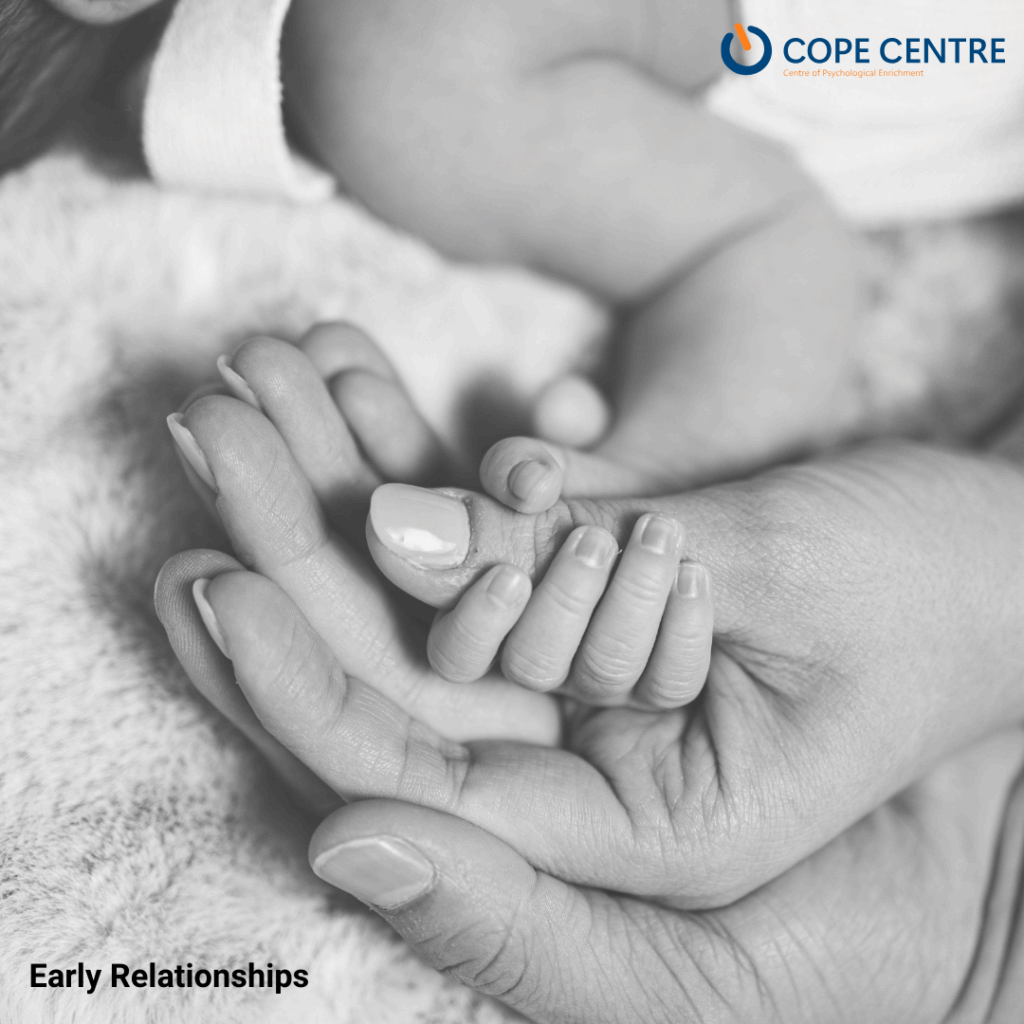
The Psychodynamic Link: Early Relationships and Adult Psychopathology
So how do attachment styles affect mental health in adulthood?
From a psychodynamic perspective, early relational experiences become internalized as unconscious templates. These templates influence:
How we regulate emotions
How we experience closeness and distance
How we respond to stress
How we perceive ourselves
How we interpret others’ intentions
When early attachment was insecure or disorganized, the child developed protective strategies. In adulthood, these same strategies may appear as symptoms:
Emotional shutdown may look like depression or detachment.
Hyperactivation of attachment needs may resemble anxiety or borderline dynamics.
Fragmented internal models may manifest as dissociation.
Psychopathology, in this light, is not random. It is often the continuation of early relational adaptations that once served survival.
This understanding moves us away from seeing symptoms as defects. Instead, they can be understood as meaningful expressions of unresolved relational experiences.
Attachment Is Influence, Not Destiny
Importantly, attachment styles are not fixed diagnoses, nor are they life sentences.
Human beings are relationally shaped — and relationally healed.
Because attachment patterns were formed in relationship, they can also shift within new relational experiences that offer safety, consistency, and emotional attunement. The adult nervous system remains capable of integration and growth.
Understanding how attachment styles affect mental health allows us to see symptoms within a developmental and relational context. It deepens our clinical thinking, strengthens our psychodynamic formulation, and reminds us that behind every pattern is a story.
When we ask not only “What symptoms are present?” but also “What early relational experiences shaped this person’s inner world?” we begin to see the full picture.
And often, that fuller picture opens the door to more compassionate, more effective support — and to the possibility of lasting change.
Written by Michael Martin (Psychosocial Support Worker)
References
Alexander, P. (2021). The antecedents and consequences of disorganised attachment and dissociation. Attachment, 15(2), 181-197.
Bender, D. S., Farber, B. A., & Geller, J. D. (2001). Cluster B Personality Traits and Attachment. Journal of the American Academy of Psychoanalysis, 29(4), 551–563.
Gomez, L. (1997). An introduction to object relations. NYU Press.
COPE Centre of Psychological Enrichment
📞 (08) 6556 6460
📧 [email protected]