Romantic relationships often thrive on empathy, vulnerability, honesty, and mutual respect. However, when one partner has traits of Narcissistic Personality Disorder (NPD), these foundations can become strained. Narcissism is more than self-centeredness, it’s a deep and often painful struggle rooted in early developmental wounds and fragile self-esteem. This blog explores how narcissistic personality dynamics manifest in relationships, how unconscious defence mechanisms drive behaviour, and how early experiences and attachment styles shape narcissistic traits through a psychoanalytic lens.
According to the Diagnostic and Statistical Manual of Mental Disorders (DSM-5), NPD is characterised by a pervasive pattern of grandiosity, a constant need for admiration, and a lack of empathy (American Psychiatric Association, 2013). While narcissism exists on a spectrum, individuals with pathological levels often experience deep insecurity beneath their confident exterior.
From a psychoanalytic perspective, narcissism is seen as a defence against underlying feelings of shame, emptiness, and fear of dependency (Kernberg, 1975; Kohut, 1971). Heinz Kohut described narcissistic behaviour as an attempt to protect a fragile self that never received adequate mirroring or validation in childhood. Otto Kernberg, on the other hand, suggested that narcissism arises from splitting, a defence that separates idealised self-images from devalued aspects of the self, preventing emotional integration (Kernberg, 2016).
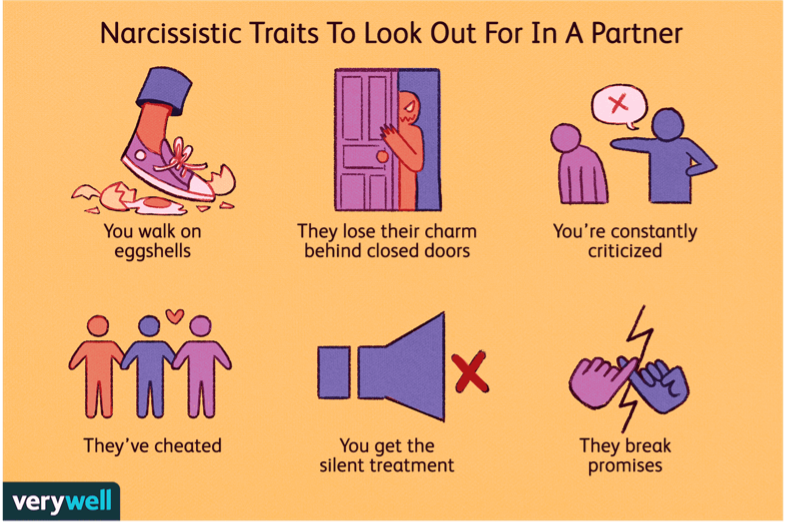
In relationships, this dynamic often presents as idealisation and devaluation: the narcissistic partner initially adores and idealises their partner, often referred to as being put on a “pedestal”, but later withdraws affection (e.g., withholding physical touch, compliments, empathetic conversation) or criticises them when they feel emotionally threatened or disappointed (Campbell & Foster, 2002).
Defence mechanisms and Narcissism:
Unconscious defence mechanisms help narcissistic individuals cope with internal conflict and protect their self-esteem. Common defences include:
- Projection: Attributing one’s own unacceptable feelings to others. For instance, a narcissistic partner may accuse their partner of being selfish or disloyal (e.g., cheating), emotions or behaviours they themselves are struggling with (Pincus & Lukowitsky, 2010).
- Idealisation and Devaluation: Early in the relationship, the narcissistic individual may place their partner on a pedestal, seeing them as perfect extensions of the self. When flaws appear, the same partner is harshly criticised or emotionally discarded such as sudden breakups (Ronningstam, 2014). This is often referred to as very high “highs’ and very low “lows” in a relationship, with partners of NPD individuals often forming trauma bonds due to the manipulation.
- Denial: They may deny wrongdoing or refuse to acknowledge their emotional vulnerability, maintaining a façade of superiority to avoid shame.
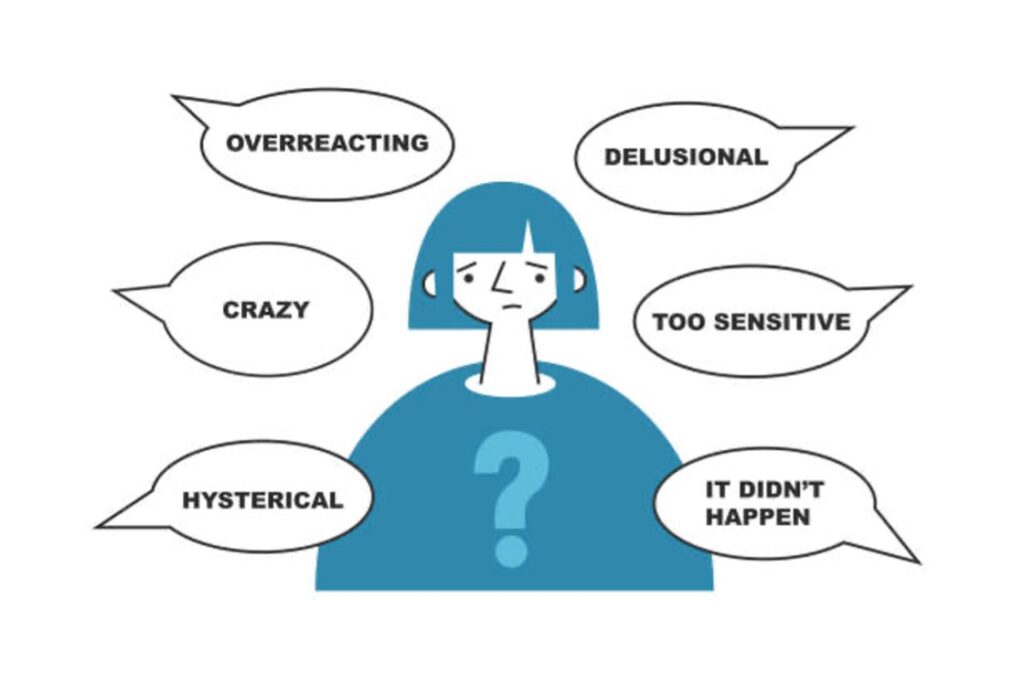
- Rationalisation and Intellectualisation: Narcissistic individuals often justify hurtful behaviours by intellectualising them. For example, claiming they are “just being honest”, that their partner “deserved it because of X, Y, Z”, or that their partner is “too sensitive.” Often placing blame on external factors opposed to internal (themselves).
These mechanisms maintain the illusion of control but ultimately distance the narcissistic individual from authentic intimacy. The partner, meanwhile, may experience confusion, rejection, and emotional exhaustion from the constant cycle of idealisation and invalidation (Miller et al., 2010).

Developmental and Attachment Roots
Psychoanalytic theory highlights that narcissistic tendencies often stem from early relational experiences. Childhood environments marked by inconsistent affection, excessive praise, or emotional neglect can impair the development of a stable sense of self (Otway & Vignoles, 2006).
Children who receive conditional love, valued only for achievement or appearance, may internalise the belief that self-worth depends on external validation. Others who experience emotional neglect may overcompensate through fantasies of superiority to defend against feelings of unworthiness (Kealy & Rasmussen, 2014).
Attachment theory complements this view. Research indicates that insecure attachment styles, particularly avoidant or anxious-preoccupied attachments, are associated with narcissistic traits (Miller et al., 2010; Otway & Vignoles, 2006). Avoidantly attached individuals may struggle with empathy and vulnerability, while anxiously attached narcissists may seek admiration to soothe fears of abandonment.
Thus, narcissistic behaviours in adulthood can be understood as adaptive strategies that once protected the child’s fragile sense of self but now hinder genuine emotional intimacy in romantic relationships.
The Impact on Romantic Relationships
Relationships involving narcissistic traits often follow predictable emotional patterns. In the beginning, the narcissistic partner may appear charismatic, confident, and deeply attentive, often referred to as the “love-bombing” phase. However, this initial intensity typically masks deeper insecurity and a need for control (Campbell & Foster, 2002).
As emotional closeness develops, the narcissistic individual may become defensive, critical, or withdrawn. Their partner’s needs or independence can be perceived as threats to their fragile ego. Over time, this may lead to power imbalances, emotional manipulation, or co-dependency, leaving the non-narcissistic partner feeling devalued or trapped.
Interestingly, research shows that while narcissists may experience short-term relational success due to their charm and confidence, their relationships often deteriorate over time due to lack of empathy and emotional reciprocity (Campbell et al., 2011).
Healing and Growth
From a psychoanalytic standpoint, growth begins when underlying vulnerabilities are brought into awareness. Psychodynamic psychotherapy can help individuals with narcissistic traits explore the origins of their defences, reconnect with authentic emotions, and develop empathy.
For partners of narcissists, therapy offers tools to recognise manipulative patterns, establish healthy boundaries, and rebuild self-worth. Understanding that narcissistic behaviours often mask deep-rooted shame can foster compassion, though change is slow and requires self-awareness and motivation from the narcissistic individual (Kealy & Rasmussen, 2014).

Key Takeaways
- Narcissistic personality disorder reflects a fragile self, defended through grandiosity and control.
- Defence mechanisms like projection, idealisation, and denial sustain the illusion of superiority while sabotaging intimacy.
- Early attachment experiences, such as conditional love or neglect, shape narcissistic patterns in adulthood.
- While narcissistic individuals may crave love, their defences often prevent the emotional closeness they desire.
- Psychoanalytic and psychodynamic therapies offer hope by addressing the root causes beneath the surface behaviours.
Written by Sophie Nardini (Psychosocial Support Worker)
References
American Psychiatric Association. (2013). Diagnostic and statistical manual of mental disorders (5th ed.).
Campbell, W. K., & Foster, C. A. (2002). Narcissism and commitment in romantic relationships. Journal of Personality and Social Psychology, 83(2), 367–382. https://doi.org/10.1037/0022-3514.83.2.367
Campbell, W. K., Brunell, A. B., & Finkel, E. J. (2011). Narcissism, interpersonal self-regulation, and romantic relationships: An agency model approach. Advances in Experimental Social Psychology, 45, 131–177. https://doi.org/10.1016/B978-0-12-385522-0.00003-3
Kealy, D., & Rasmussen, B. (2014). The narcissistic self: Background, an integrative model, and treatment considerations. American Journal of Psychotherapy, 68(4), 453–471. https://doi.org/10.1176/appi.ajp.2014.14060723
Kernberg, O. F. (2016). The Inseparable Nature of Love and Aggression: Clinical and Theoretical Perspectives. American Psychiatric Publishing. https://doi.org/10.4324/9781315644301
Miller, J. D., Dir, A., Gentile, B., Wilson, L., Pryor, L. R., & Campbell, W. K. (2010). Grandiose and vulnerable narcissism: A nomological network analysis. Journal of Personality, 78(5), 1013–1042. https://doi.org/10.1111/j.1467-6494.2010.00669.x
Otway, L. J., & Vignoles, V. L. (2006). Narcissism and childhood recollections: A quantitative test of psychoanalytic predictions. European Journal of Personality, 20(4), 447–459. https://doi.org/10.1002/per.597
Pincus, A. L., & Lukowitsky, M. R. (2010). Pathological narcissism and narcissistic personality disorder. Annual Review of Clinical Psychology, 6, 421–446. https://doi.org/10.1146/annurev.clinpsy.121208.131215
Ronningstam, E. (2014). Narcissistic personality disorder: Facing DSM-5. Psychiatric Clinics of North America, 37(1), 123–137. https://doi.org/10.1016/j.psc.2013.11.001
COPE Centre of Psychological Enrichment
📞 (08) 6556 6460
📧 [email protected]